
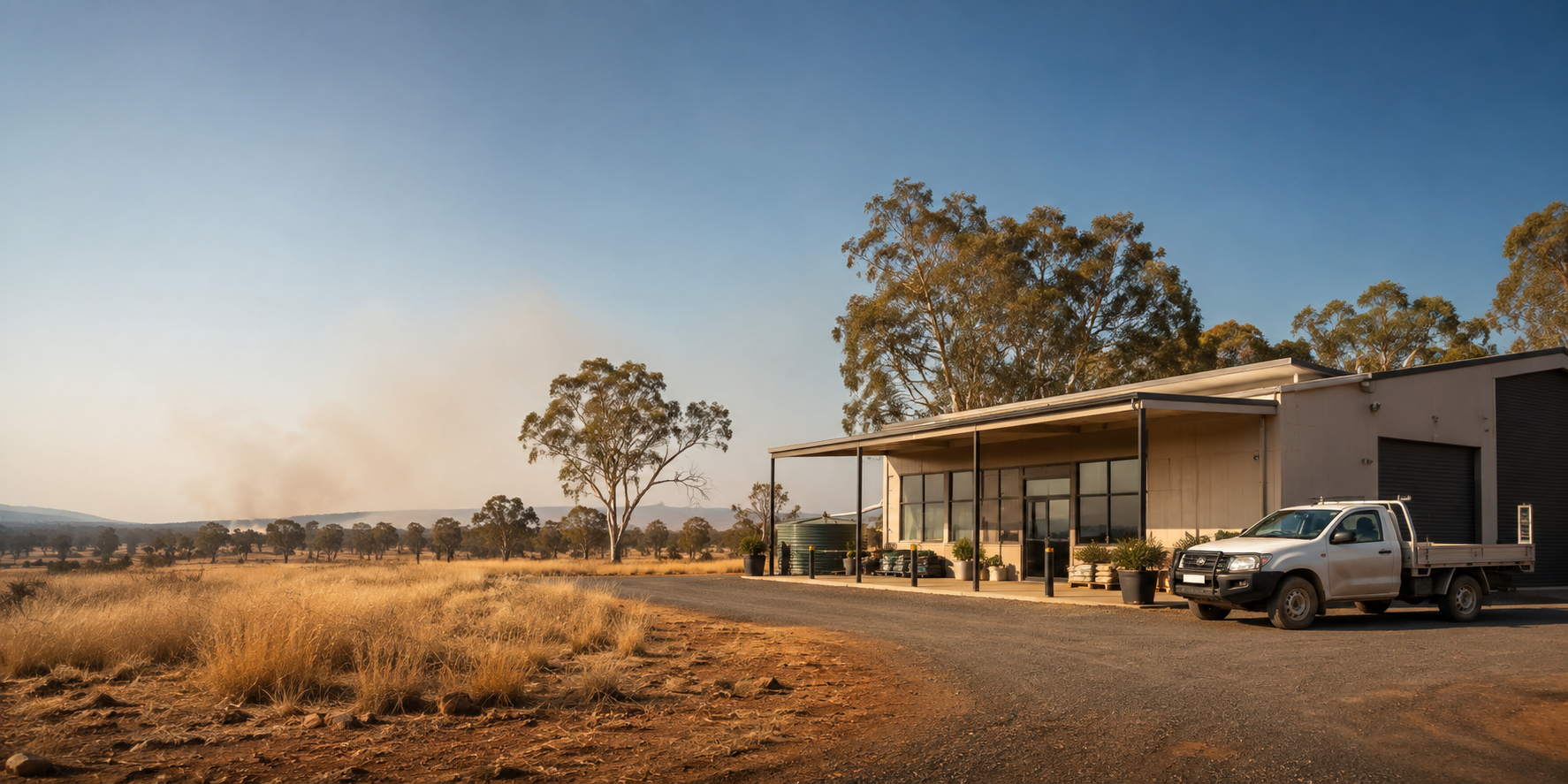
El Niño can contribute to hotter, drier conditions across parts of Australia, increasing the risk of bushfires, extreme heat and operational disruption. For businesses, these conditions can affect much more than physical property. Road closures, power outages, supply chain delays and reduced customer access can all interrupt normal trading.
At the time of writing in August 2026, the Bureau of Meteorology reports that a strong El Niño is firmly established and likely to intensify during spring. The Bureau expects the event to persist into autumn 2027, although it cautions that a strong El Niño does not necessarily produce equally severe effects across every part of Australia.
Recent analysis from ABC News indicates that the 2026 El Niño has developed particularly quickly and could become one of the strongest on record. Below-average rainfall and unusually high temperatures are forecast across many areas, raising concerns about drought and fire danger.
While weather conditions cannot be controlled, businesses can take practical steps to prepare. This should include reviewing your risk management procedures and understanding how your business insurance may respond if your property or operations are affected.
What Is El Niño?
El Niño is the warm phase of the El Niño–Southern Oscillation, commonly referred to as ENSO. ENSO describes recurring changes in ocean temperatures, winds and atmospheric pressure across the tropical Pacific Ocean.
During an El Niño event, sea surface temperatures in the central and eastern equatorial Pacific become warmer than average. Trade winds may weaken or reverse, changing the movement of warm water and tropical moisture across the Pacific. This can alter rainfall and temperature patterns throughout Australia.
The Southern Oscillation Index, or SOI, is one of the measures used to monitor ENSO. It compares atmospheric pressure between Tahiti and Darwin. Sustained negative SOI values are often associated with El Niño conditions.
However, the SOI is not the only measure used. Meteorologists also consider:
- Sea surface and subsurface ocean temperatures
- Trade wind strength and direction
- Cloud patterns
- Atmospheric pressure
- Ocean currents
- Other climate drivers, including the Indian Ocean Dipole and Southern Annular Mode
This means El Niño is not simply a period of hot weather. It is a large-scale interaction between the ocean and atmosphere that can influence weather patterns over many months.
How Can El Niño Affect Australia?
The effects of El Niño vary between regions and from one event to another. It does not mean every part of Australia will experience drought, extreme heat or bushfires.
Nevertheless, El Niño is commonly associated with:
- Lower-than-average rainfall across parts of eastern and southern Australia
- Higher daytime temperatures
- More frequent or intense periods of extreme heat
- Increased fire danger, particularly in south-east Australia
- An increased risk of frost in some agricultural areas
- Reduced alpine snowfall
- A later onset of the northern Australian monsoon
- Fewer tropical cyclones in the Australian region
Local geography, soil moisture, vegetation, wind conditions and other climate influences all affect the eventual outcome.
Does El Niño Cause Bushfires?
El Niño does not directly cause a bushfire. Bushfires require an ignition source, and their behaviour is influenced by fuel loads, wind, temperature, humidity, terrain and the condition of surrounding vegetation.
However, the combination of below-average rainfall and higher temperatures can dry out soil and vegetation, creating conditions in which fires may start more easily and spread more rapidly.
According to the Bureau of Meteorology’s information about El Niño in Australia, some El Niño years have been followed by severe summer fires, including:
- The Ash Wednesday bushfires in February 1983
- The 2002–03 fire season, which included the Canberra bushfires
- The 2006–07 fire season
Not every significant bushfire occurs during El Niño. The most severe phase of the Black Summer bushfires actually occurred after El Niño conditions had eased. This demonstrates why El Niño should be treated as one risk indicator rather than a guarantee of particular weather conditions.
The Financial Impact of Australian Bushfires
The cost of previous bushfire events demonstrates the potential scale of the risk. Based on historical catastrophe information supplied by the Insurance Council of Australia:
- Claims arising from the 1983 Ash Wednesday bushfires had a normalised cost of approximately $2.46 billion.
- The 2019–20 bushfires across New South Wales, Queensland, Victoria and South Australia resulted in approximately $2.32 billion in insurance claims.
- Claims related to the 2003 Canberra bushfires had a normalised cost of approximately $839 million.
Normalised figures estimate what the insured losses from a historical event would cost in more current financial terms. These figures may change as the underlying data and normalisation basis are updated.
The financial effects of a bushfire can also extend well beyond properties directly damaged by flames. Businesses may experience:
- Smoke or heat damage
- Loss of stock, equipment or vehicles
- Electricity, water or telecommunications outages
- Road closures and restricted access
- Evacuations
- Supply chain disruption
- Employee absences
- Reduced customer numbers
- Temporary or prolonged business closure
Which Businesses May Be Particularly Exposed?
Almost any organisation can be disrupted by extreme weather or bushfires, but some industries may have greater exposure.
Agriculture and primary production
Farms and agricultural businesses can be affected by water shortages, heat stress, crop losses, livestock risks, equipment damage and interruptions to transport or processing.
Construction and trades
Extreme heat, smoke and fire danger can make outdoor work unsafe. Construction schedules may also be affected by site closures, material shortages, road restrictions and damage to plant or equipment.
Tourism and hospitality
Tourism operators, accommodation providers, attractions, restaurants and cafés may lose revenue if visitors cannot reach an area or decide to cancel their travel plans.
Transport and logistics
Bushfires can close major roads and rail routes, disrupting deliveries and preventing employees, customers or suppliers from reaching business premises.
Retail and warehousing
Retailers and wholesalers may face property damage, stock losses, power interruptions, delayed deliveries and lower customer traffic.
Manufacturing
Manufacturing businesses may be affected by damage to premises or machinery, interrupted utilities, shortages of essential components and delays involving key suppliers.
What Business Insurance Should You Consider?
There is no single “El Niño insurance” policy. Instead, different types of business insurance may respond to particular damage or losses associated with fires and other insured events.
The appropriate cover will depend on your location, operations, property, vehicles, employees and dependencies.
Business Pack Insurance
A Business Pack Insurance policy combines several forms of business cover into one package. Depending on the policy and selected sections, it may provide protection for:
- Buildings and business premises
- Contents, furniture and fittings
- Stock and materials
- Equipment and machinery
- Fire and accidental damage
- Glass damage
- Theft and loss of money
- Machinery breakdown
- Public and products liability
- Business interruption
Flood cover should be checked carefully. It may be included, excluded or available as an optional addition, depending on the insurer, property and location. El Niño does not eliminate the possibility of storms, flash flooding or localised heavy rainfall.
Business Interruption Insurance
Physical damage is only part of the financial risk created by a bushfire. A business may be unable to trade for weeks or months while premises are repaired, equipment is replaced and customers return.
Business Interruption Insurance may help cover financial losses following an insured event. Depending on the policy, this can include:
- Lost income or gross profit
- Ongoing expenses such as rent and wages
- Additional costs incurred to continue trading
- Temporary relocation expenses
- Costs associated with restoring normal operations
In many traditional policies, business interruption cover must be triggered by insured physical loss or damage. However, some policies include extensions for circumstances such as prevention of access, damage to utilities or disruption involving important suppliers or customers.
These extensions are subject to their own definitions, distance limits, waiting periods, exclusions and maximum benefit periods.
Commercial Vehicle Insurance
A comprehensive Commercial Vehicle Insurance policy may cover accidental damage, theft, fire and certain natural disasters affecting business vehicles.
Depending on the policy selected, cover may help:
- Repair or replace a vehicle damaged by fire
- Repair a vehicle following an accident
- Replace a vehicle that is stolen or written off
- Cover liability for damage caused to another person’s vehicle or property
Businesses should check whether all vehicles, trailers, mobile equipment and accessories are correctly listed and whether their current insured values would be sufficient to replace them.
Plant and Equipment Insurance
Businesses that depend on machinery, tools or mobile plant should check plant and equipment insurance to ascertain how these assets are insured while they are:
- At the main business premises
- On a worksite
- Stored elsewhere
- Being transported
- Hired or leased
- Temporarily located in a higher-risk area
Damage caused by fire may be covered, but the scope of protection will depend on the policy wording and how the equipment is being used.
Will Business Interruption Insurance Cover a Road Closure?
This depends on the cause of the closure and the wording of the policy.
Some business interruption policies include a prevention of access extension. This may provide cover when an insured event in the surrounding area causes authorities to prevent access to the business, even if the insured premises are not physically damaged.
However, cover is not automatic. The policy may specify:
- What event must have caused the closure
- Whether the closure must be ordered by a government or emergency authority
- How close the damage must be to the insured premises
- How long access must be prevented
- The maximum period or amount covered
- Whether a waiting period or excess applies
A general decline in visitor numbers or customers choosing to stay away may not be sufficient to trigger a claim.
Business Interruption Case Study
Brian operates a water park in a popular tourist destination. A bushfire occurs nearby but does not physically damage his property.
Emergency authorities close the main highway into the area, which is the only practical route visitors can use to reach the water park. Brian is required to close and suffers a substantial loss of revenue.
If Brian’s business interruption policy includes an appropriate prevention of access extension, and the circumstances satisfy its conditions, the policy may respond to some of his financial loss.
The outcome could be different if the road remained open but tourists simply decided not to visit. Without insured physical damage or another qualifying policy trigger, reduced customer demand alone may not be covered.
This is an illustrative example only. Actual claim outcomes depend on the circumstances, policy wording and applicable limits and exclusions.
What May Not Be Covered?
Business insurance policies differ considerably. Depending on the policy, common gaps or exclusions may include:
- Loss of income without insured physical damage or another specified trigger
- A voluntary closure that is not required by an authority
- Customers choosing not to visit an area
- Property or equipment not declared under the policy
- Damage caused by wear and tear, deterioration or inadequate maintenance
- Losses above the policy’s sum insured
- Disruption continuing beyond the selected indemnity period
- Prevention of access where the relevant extension has not been selected
- Damage caused by an excluded event
- Certain losses involving utilities, suppliers or customers
- Uninsured flood damage
- Policy excesses and waiting periods
Businesses should not assume that every consequence of a bushfire or extreme weather event will be covered.
What Should You Review Before Fire Season?
An insurance review should consider how the business operates today, not how it operated when the policy was first arranged.
Questions to discuss with your insurance broker include:
- Are your property values up to date?
Consider current rebuilding costs, equipment prices, debris removal, professional fees and changes to building standards. - Would your stock sum insured cover seasonal peaks?
Retailers, wholesalers and manufacturers may hold substantially more stock at particular times of the year. - Is your business interruption figure accurate?
Understating turnover, gross profit or operating expenses could leave the business with a significant shortfall. - Is the indemnity period long enough?
Rebuilding, replacing equipment and restoring normal revenue can take longer than expected. Depending on the business, 12 months may not be sufficient. - Do you have prevention of access cover?
Check how the policy responds if emergency authorities close surrounding roads or restrict access. - Are interruptions to utilities covered?
Determine whether the policy responds to insured disruption involving electricity, water, gas or telecommunications. - Do you depend on key suppliers or customers?
Consider how the business would be affected if a major supplier, customer or transport route were disrupted. - Are vehicles, plant and equipment insured wherever they are used?
Check whether cover extends beyond the main premises and whether each asset is correctly valued. - Have your business activities or locations changed?
New premises, services, storage areas, employees or equipment may alter your risk profile. - Do you understand the exclusions, excesses and waiting periods?
These can determine whether a claim is covered and how much the business receives.
How Else Can Your Business Prepare?
Insurance should form part of a broader business continuity and risk management plan.
Practical preparations may include:
- Monitoring Bureau of Meteorology forecasts and emergency service warnings
- Developing evacuation, closure and employee communication procedures
- Reviewing workplace arrangements for extreme heat and smoke
- Clearing combustible material where permitted and appropriate
- Maintaining buildings, gutters, electrical systems and fire equipment
- Keeping an up-to-date photographic inventory of property and stock
- Backing up important business data away from the premises
- Maintaining current supplier, employee, customer and insurer contact details
- Identifying alternative suppliers and transport routes
- Considering how employees could work remotely or from another location
- Keeping copies of insurance documents in a secure, accessible location
Review Your Business Insurance With AIB
El Niño forecasts provide businesses with an opportunity to review their risks before severe weather or fire threatens their operations.
AIB Insurance Brokers can assess your current arrangements, explain how different sections of your policy may respond and identify potential gaps involving property, business interruption, vehicles, equipment and liability.
Ask AIB to review your current policy or contact our team to discuss appropriate business insurance for your operations.
Frequently Asked Questions
Does business insurance cover bushfire damage?
Many business property policies cover fire damage to insured buildings, contents, stock and equipment. Cover depends on the insured property, policy wording, sums insured, exclusions and excesses.
Does business interruption insurance cover bushfires?
Business interruption insurance may cover lost income and additional operating expenses when an insured bushfire damages the business and interrupts trading. Some policies may also cover prevention of access or damage to utilities, but these extensions are subject to specific conditions.
Can I claim if a bushfire closes the road to my business?
You may be able to claim if your policy includes prevention of access cover and the closure meets the policy’s requirements. A general reduction in customer numbers without physical damage or an official access restriction may not be covered.
Does El Niño mean my business is automatically at greater risk?
Not necessarily. The effect of El Niño differs by region, industry and individual event. Your exposure will also depend on local vegetation, rainfall, fire conditions, property construction, business dependencies and risk management procedures.
Can I increase my insurance cover during an El Niño event?
You can ask your broker to review your cover at any time, but any change will be subject to insurer approval and underwriting requirements. It is better to review your insurance before a fire or other event becomes imminent.
Does commercial vehicle insurance cover bushfire damage?
Comprehensive commercial vehicle insurance may cover vehicles damaged or destroyed by fire. Third-party-only policies generally do not cover damage to your own vehicle, while third-party fire and theft policies provide more limited protection.
Does El Niño mean flood insurance is unnecessary?
No. El Niño can increase the likelihood of drier conditions across parts of Australia, but storms, flash flooding and localised heavy rainfall can still occur. Flood cover should be assessed according to the location and specific risks facing the business.
Important notice
This article is of a general nature only and does not take into account your specific objectives, financial situation or needs. It is also not financial advice, nor complete, so please discuss the full details with your AIB insurance broker as to whether these types of insurance are appropriate for you. Deductibles, exclusions and limits apply. You should consider any relevant Target Market Determination and Product Disclosure Statement in deciding whether to buy or renew these types of insurance. Various insurers issue these types of insurance and cover can differ between insurers.
Steadfast Group Ltd ACN 073 659 677
Important notice – Steadfast Group Limited ABN 98 073 659 677
This article provides information rather than financial product or other advice. The content of this article, including any information contained in it, has been prepared without taking into account your objectives, financial situation or needs. You should consider the appropriateness of the information, taking these matters into account, before you act on any information. In particular, you should review the product disclosure statement for any product that the information relates to it before acquiring the product.
Information is current as at the date the article is written as specified within it but is subject to change. Steadfast Group Ltd and Steadfast Network Brokers make no representation as to the accuracy or completeness of the information. Various third parties have contributed to the production of this content. All information is subject to copyright and may not be reproduced without the prior written consent of Steadfast Group Limited.